
This excerpt taken from Dr. Campbell’s The Future of Nutrition (2020) discusses the “upper safe limit” (UL) for dietary protein, set at 35% of total calorie intake by the macronutrients subcommittee of the Food and Nutrition Board (FNB) in 2002. Beyond this passage, Dr. Campbell discusses the industry connections of the FNB board members, including connections to Nestlé Corporation. To learn more about The Future of Nutrition, read our dedicated webpage. To learn more about nutrition and its role in preventing and treating disease, check out our Plant-Based Nutrition Certificate.
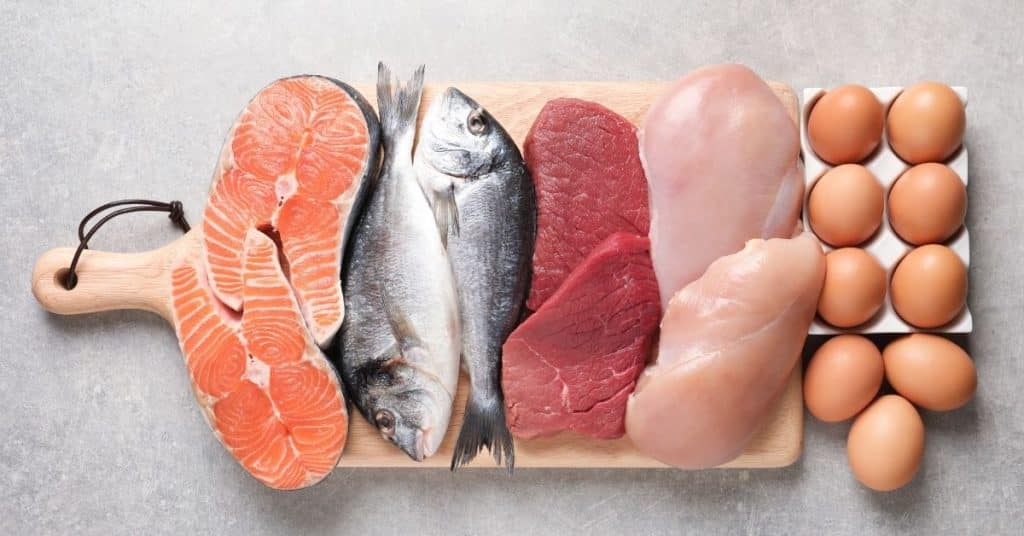
The UL [upper limit] of 35 percent dietary protein is also lacking in practical usefulness. One would have to consume an inordinate amount of animal-based protein to reach this threshold. The difference between a diet containing the recommended 10 percent of calories from protein and a diet containing the upper limit of 35 percent of calories from protein is biologically massive. The former could be achieved by eating an exclusively plant-based diet (plants contain at least 8–10 percent protein), while the latter can only be achieved by eating a nearly carnivorous diet. By endorsing both, we endorse neither. In effect, the recommendation becomes meaningless—have as much protein as you want! This recommendation has the dual effect of protecting industry and giving consumers a feeling of false security.
Of course, the science is less forgiving. The science, which I will discuss further in the following chapters—and which you can, of course, find in greater detail in my previous books—makes it clear that a diet containing 35 percent of calories from protein produces radically different health outcomes than a diet containing 10 percent of calories from protein. The evidence is clear:
- chronic disease risk increases with even small intakes of animal-based protein,
- eating more animal-based foods is associated with eating fewer disease-protective whole plant foods,
- plant-based foods provide all the protein that is needed, and
- there are numerous biological mechanisms, as discovered in laboratory animal studies, to explain the damaging effect of eating more animal-based foods and fewer plant-based foods.
Increasing dietary protein intake to just 20 percent, much less 35 percent, has been shown to increasea a range of serious health problems, including cancer, with each successive percentage increase associated with an increase in response, commonly referred to as a dose-response.[1] (Keep in mind that the observed increases in disease risk in population studies are not due only to animal protein; with the consumption of more animal protein, other nutrient intakes also shift significantly. Collectively, these changes have a very substantial effect.)
Two members of the FNB committee that set this 35 percent upper-limit recommendation are friends of mine. When I questioned them after reading the news release, they seemed unaware that the committee had even established that conclusion. One of those friends, Joe Rodricks, a long-time senior scientist and administrator at FDA, initially and understandably became defensive about the supporting data for this limit (or rather, the lack of supporting data), but finally admitted to me, when I challenged him, “Colin, you know I don’t know anything about nutrition.” His area of specialty, as I did know, was actually toxicology! My other friend and colleague on the committee claimed to have never even seen the 35 percent figure published in the news release, telling me he must have missed it because there was so much material to read as the committee was winding up its business. Given that the 35 percent upper limit is highlighted in the opening sentence of the press release, this raises a number of questions.[2] Namely, who wrote this disease-producing recommendation, and when did they write it? How much input did they receive from the other members of the committee? How responsible were the FNB’s leaders, and how impactful were their industry connections?
References
- Campbell, T. C. Nutrition renaissance and public health policy. J. Nutr. Biology 3, 124–138, doi:10.1080/01635581.2017.1339094 (2017).
- National Academy of Sciences. (ed The National Academies) 7 (National Research Council, Institute of Medicine, Washington, DC, 2002).
You Might Also Like








Copyright 2026 Center for Nutrition Studies. All rights reserved.

Deepen Your Knowledge With Our
Plant-Based Nutrition
Certificate
Plant-Based Nutrition Certificate
- 23,000+ students
- 100% online, learn at your own pace
- No prerequisites
- Continuing education credits