
Most people never read the Dietary Guidelines for Americans, much less closely enough to keep up with all of the minute changes between each edition, which are released jointly every five years by the US Departments of Health and Human Services (HHS) and Agriculture (USDA). I suspect very few people ever change their dietary choices solely because of the updates. But that’s not to say the guidelines are unimportant. They get a lot of attention whenever they are released, and rightfully so.
The updates are very important for several reasons: they provide a snapshot of shifting US food and nutrition policy; they give a glimpse of the powers that shape our collective understanding and application of nutrition science (or, as is sometimes the case, our misunderstanding and misapplication of nutrition); and critically, they form the basis of national nutrition programs like the school meals program, which feed many millions of Americans every year. This means that even though many people aren’t choosing something different directly because of the recommendations, the choices available to them are affected.
Those paying attention during the past few weeks will have probably noticed that the recently released 2025–2030 guidelines have provoked a large press response and widespread feedback from doctors, scientists, and concerned citizens. This is not unusual. The release of new dietary guidelines often attracts a ton of attention. However, the noise surrounding this latest edition may be even louder than usual. There are several reasons why, which we will explore in this and a follow-up article. We’ll look at the most surprising features of this edition of the guidelines, the unusual process that shaped it, the recommendations it gets right, and some of the areas that could use improvement.
Key Takeaways from the New Dietary Guidelines
Perhaps the most immediately striking thing about the guidelines is the way they have been introduced to the public. A huge emphasis has been placed on how different these guidelines are from previous iterations. The introductory text begins, “These Guidelines mark the most significant reset of federal nutrition policy in our nation’s history.”[1] A “fact sheet” from HHS likewise distances these guidelines from previous iterations:[2]
[Americans’] government has been unwilling to tell them the truth . . . Under the leadership of President Trump, the government is now going to tell Americans the truth . . . For decades, the Dietary Guidelines favored corporate interests over common sense, science driven advice . . . That ends today.
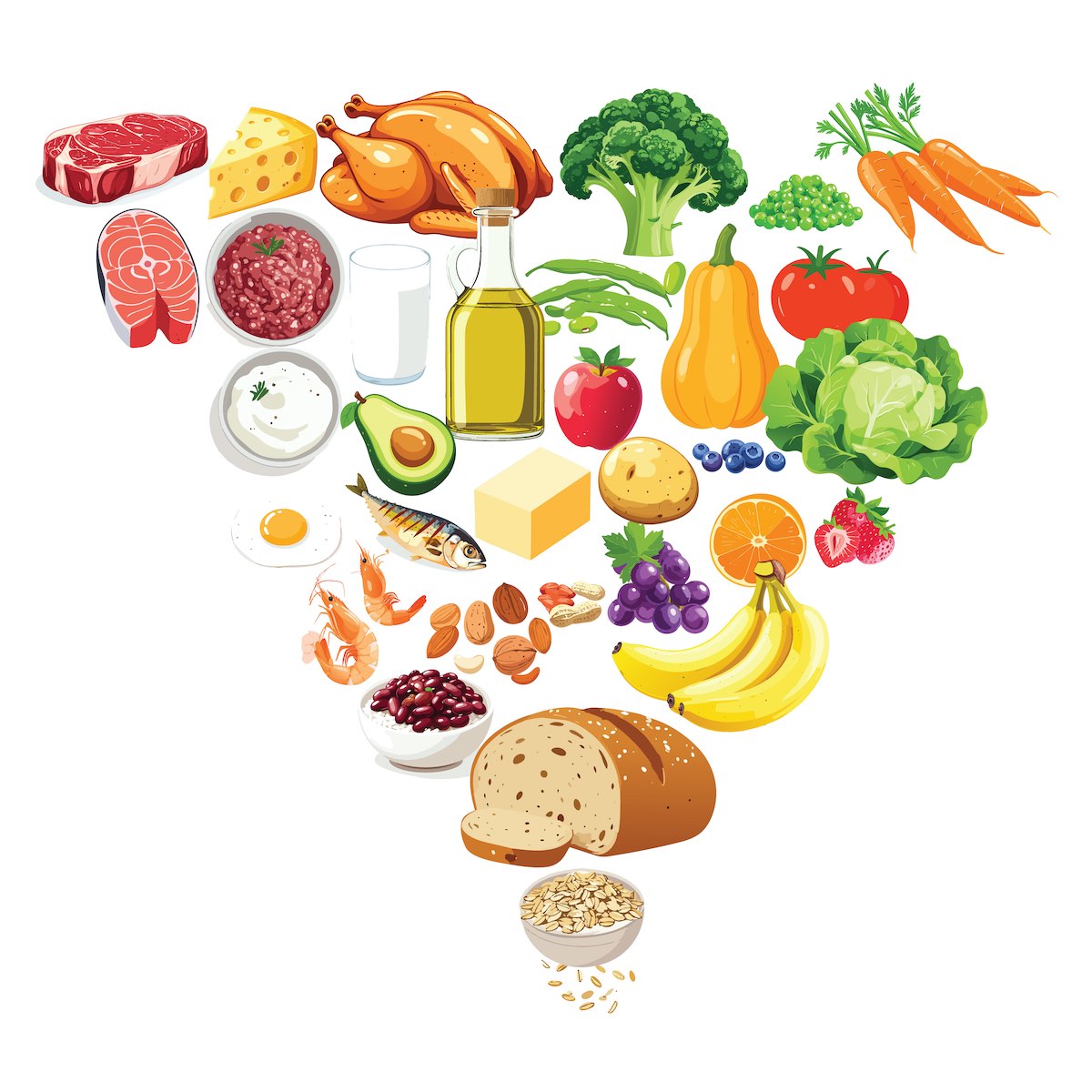
In what might be interpreted as a symbolic effort to drive home this radical shift, the food pyramid is back—but now flipped upside down. The new pyramid shows protein, dairy, healthy fats, vegetables, and fruits at the top, with whole grains at the narrower bottom.
The overarching message of the new guidelines is simple: eat real food. That means “foods that are whole or minimally processed and recognizable as food . . . prepared with few ingredients and without added sugars, industrial oils, artificial flavors, or preservatives.”[3] Those familiar with the research underpinning our work at the T. Colin Campbell Center for Nutrition Studies will know that we agree wholeheartedly with the message of eating fewer processed foods. This is undoubtedly a good thing. Likewise, recommendations to limit sugar consumption (and to distinguish between added sugars and those contained in whole foods) are encouraging and clear-sighted, even if not quite as revolutionary as the authors might seem to suggest.
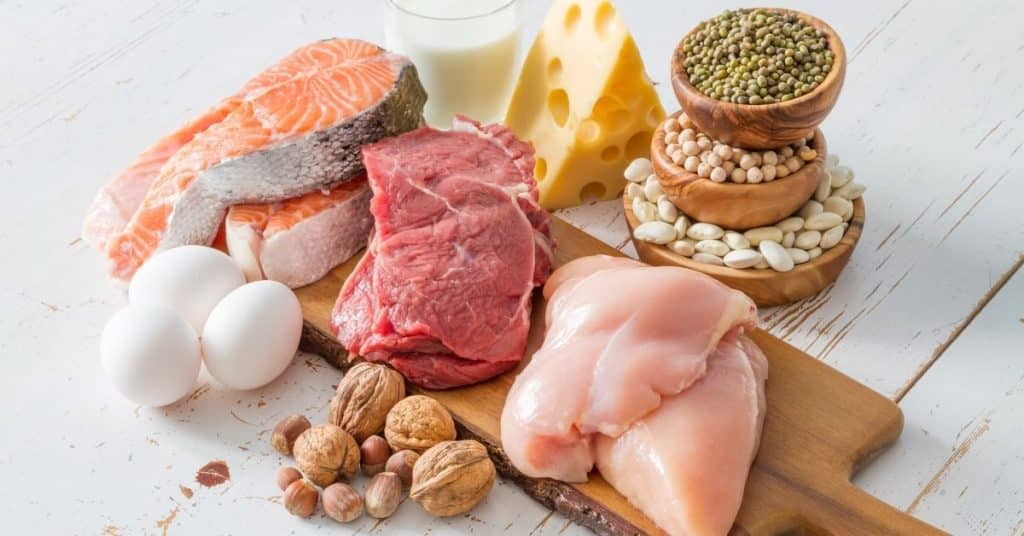
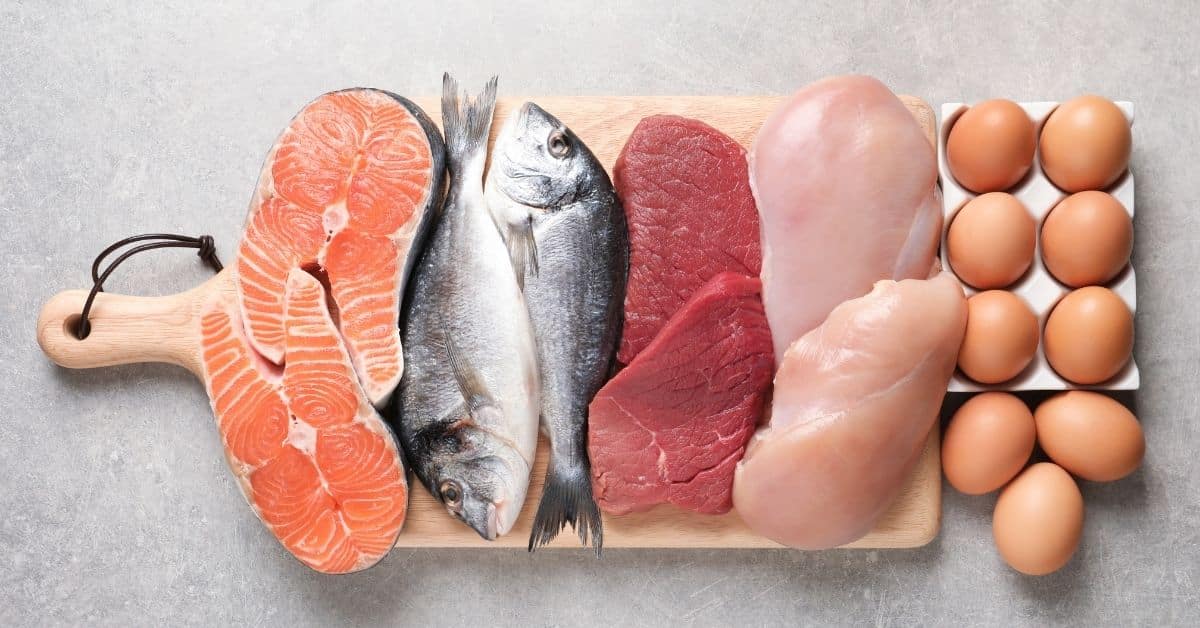
On the other hand, some parts of the guidelines and associated documents are baffling. One glaring example is the claim of “ending the war on protein.”[3] You may be surprised to learn about this war—I know I was. According to the National Health and Nutrition Examination Survey (NHANES), the average American has consistently surpassed the recommended dietary allowance (RDA) for protein, not only recently but for decades.[4] If anything, we are in the midst of a huge protein craze.[5–7] Anyone who suggests otherwise either (1) hasn’t been paying attention, (2) doesn’t know what protein is, or (3) is being willfully disingenuous.
Perhaps what they mean to address is the accumulating evidence linking high consumption of animal-based foods to higher rates of disease and premature death, or the research showing how the currently dominant industrial agriculture, especially animal agriculture, imperils the systems supporting life on earth.[8] As this growing body of evidence has become less refutable, many institutions and influential individuals have gradually shifted toward recommending a more plant-predominant diet. But to characterize this evidence and increased awareness as a war on protein is extremely simplistic and misleading. It ignores that plants provide protein too. In fact, most of the protein consumed worldwide comes from plant-based sources. Our society’s preoccupation with getting enough protein is as high as it has ever been, so much so that even reports of the carcinogenicity of processed red meat are couched in language that emphasizes the “nutritional value” of animal protein.
In any case, what does “ending the war on protein” look like in practice? The guidelines recommend a daily protein target of 1.2 to 1.6 grams per kilogram of body weight. For context, that’s up to twice as much as the long-established recommended dietary allowance (0.8 g/kg) needed to avoid deficiency in nearly the entire population. We have written about this before, in numerous articles: protein deficiency is rare provided one is not starving. Measures of protein “quality” have perennially neglected to account for the research linking animal-based foods with disease, disability, and death. And so, this is what the rhetoric really boils down to: not ending a war on protein, but feeding our faith in animal-source foods as necessary and healthy.
Also noteworthy is the dairy recommendation. Whereas previous recommendations emphasized choosing fat-free and low-fat options, this edition explicitly endorses the inclusion of full-fat dairy.[9][1] This is especially surprising considering that the recommendation to limit saturated fat consumption to 10 percent of total daily calories has remained intact in this edition. Some quick math demonstrates the tension between these recommendations. Three standard servings of full-fat milk contain almost fourteen grams of saturated fat, or around 125 calories.[10] If the goal is to limit saturated fat to 10 percent of total daily calories (200 calories in a 2,000-calorie dietary pattern), surely it would make more sense to recommend lower-fat dairy sources. It would make sense to choose less fatty foods generally. And yet, that’s not what these guidelines recommend at all. Prominently positioned at the top-left-hand side of the inverted pyramid—foods we are encouraged to eat in abundance—are saturated fat–rich foods.
This is not to say that the previous recommendation to limit full-fat dairy was the ideal (we do not recommend consuming any dairy, regardless of its fat content), but at least it showed a level of internal logic that seems to be lacking now. Now, the guidelines seem torn between the prevailing wisdom and research of the past few decades and a desire to recommend even more animal-based foods.


In another interesting shift, the guideline for alcohol no longer comes with a specific upper limit (previously one or two drinks per day, for women and men respectively). The new wording, “consume less alcohol for better overall health,” may appeal to some for its simplicity. However, it arguably threatens to create more confusion than clarity. Among those critical of the removal of evidence-based upper limits is the American Association for the Study of Liver Diseases:[11]
The [AASLD] expresses deep concern . . . Earlier editions of the DGA provided clear daily limits for alcohol consumption based on available evidence. In contrast, the 2025–2030 guidelines do not establish any daily limits and do not account for biological differences in alcohol metabolism between men and women . . . [These guidelines] deny Americans evidence-based recommendations to make healthy choices.
To summarize, the guidelines are a mixed bag. The emphasis on limiting processed foods is encouraging. So is the emphasis on the role of dietary lifestyle in addressing our greatest killers and reducing healthcare spending. This seems to mark a positive shift away from the business-as-usual solution of treating these diseases at the pharmacy or with reactive medical interventions. But how fully are we really shifting away from those outcomes if we only partly address the failures of our current dietary pattern, by focusing almost exclusively on processed foods while continuing to endorse the high consumption of animal-based foods (and pushing for even higher consumption)? Claims of radical change ring hollow given this larger context.
References
- US Department of Health and Human Services (HHS) and US Department of Agriculture (USDA). Dietary guidelines for Americans, 2025–2030. January 2026. https://cdn.realfood.gov/DGA.pdf
- Assistant Secretary for Public Affairs (ASPA). Fact sheet: Trump Administration resets U.S. nutrition policy, puts real food back at the center of health. US Department of Health and Human Services (HHS). January 7, 2026. https://www.hhs.gov/press-room/fact-sheet-historic-reset-federal-nutrition-policy.html
- Frequently asked questions. Accessed February 16, 2026. https://realfood.gov/
- National Center for Health Statistics, National Health and Nutrition Examination Survey. See Sources and Definitions, National Health and Nutrition Examination Survey (NHANES) and Health, United States, 2020–2021 Table McrNutr.
- Luse B. Protein seems to suddenly be everywhere. Here’s why. All Things Considered (NPR). January 30, 2025. https://www.npr.org/2025/01/30/nx-s1-5270923/protein-seems-to-suddenly-be-everywhere-heres-why
- Callahan A. The more protein, the better? New York Times. April 9, 2025. https://www.nytimes.com/2025/04/09/well/eat/protein-fact-check.html
- Ro C. Food firms scramble to meet the high-protein craze. October 6, 2025. https://www.bbc.com/news/articles/c20zk35ypxno
- Willett W, Rockström J, Loken B, et al. Food in the Anthropocene: the EAT-Lancet Commission on healthy diets from sustainable food systems. Lancet. 2019;393(10170):447-492. doi:10.1016/S0140-6736(18)31788-4
- U.S. Department of Agriculture and U.S. Department of Health and Human Services. Dietary Guidelines for Americans, 2020-2025. 9th Edition. December 2020. https://www.dietaryguidelines.gov/sites/default/files/2020-12/Dietary_Guidelines_for_Americans_2020-2025.pdf
- FoodData Central. Milk, whole, 3.25% milkfat, with added vitamin D. December 16, 2019. https://fdc.nal.usda.gov/food-details/746782/nutrients
- American Association for the Study of Liver Diseases (AASLD). AASLD Raises Concern Over Removal of Evidence-Based Alcohol Guidance in 2025–2030 Dietary Guidelines for Americans. January 9, 2026. https://www.aasld.org/aasld-raises-concern-over-removal-evidence-based-alcohol-guidance-2025-2030-dietary-guidelines
You Might Also Like







Copyright 2026 Center for Nutrition Studies. All rights reserved.

Deepen Your Knowledge With Our
Plant-Based Nutrition
Certificate
Plant-Based Nutrition Certificate
- 23,000+ students
- 100% online, learn at your own pace
- No prerequisites
- Continuing education credits